01 · SETUP
Rotating laser + receivers
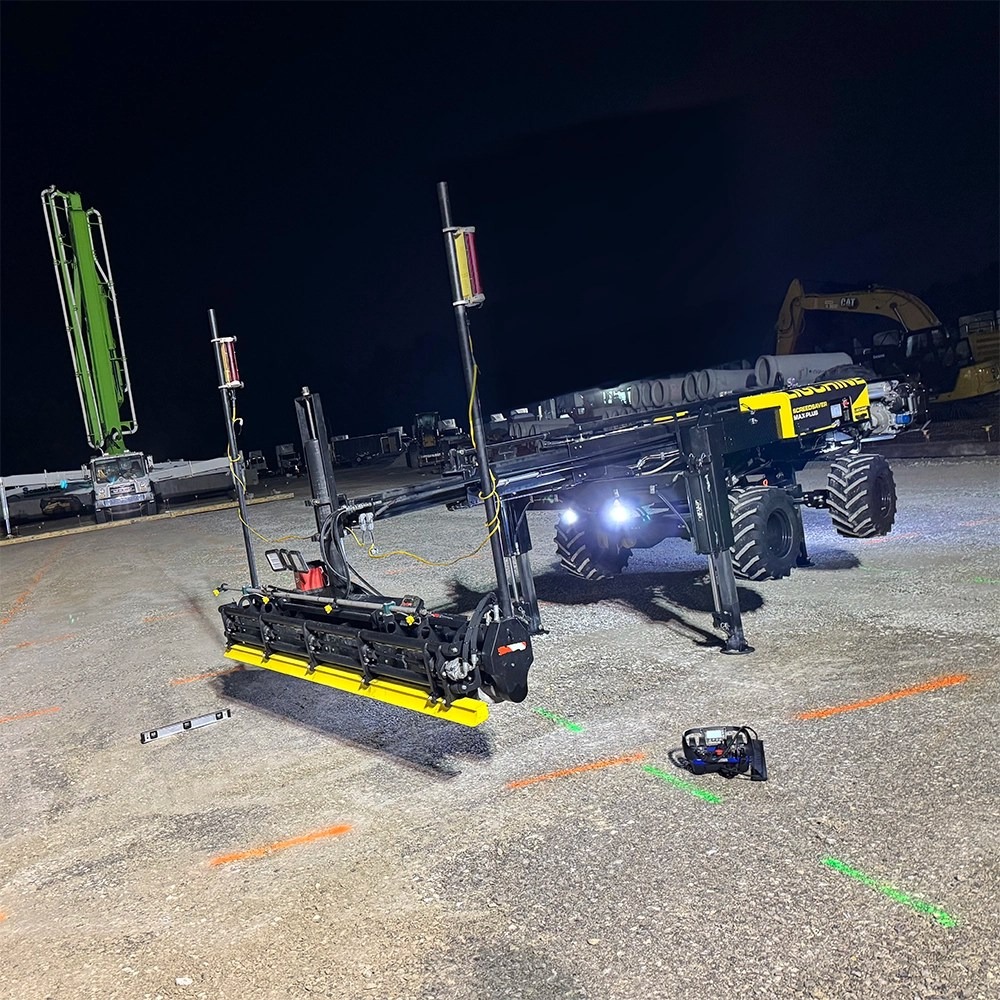
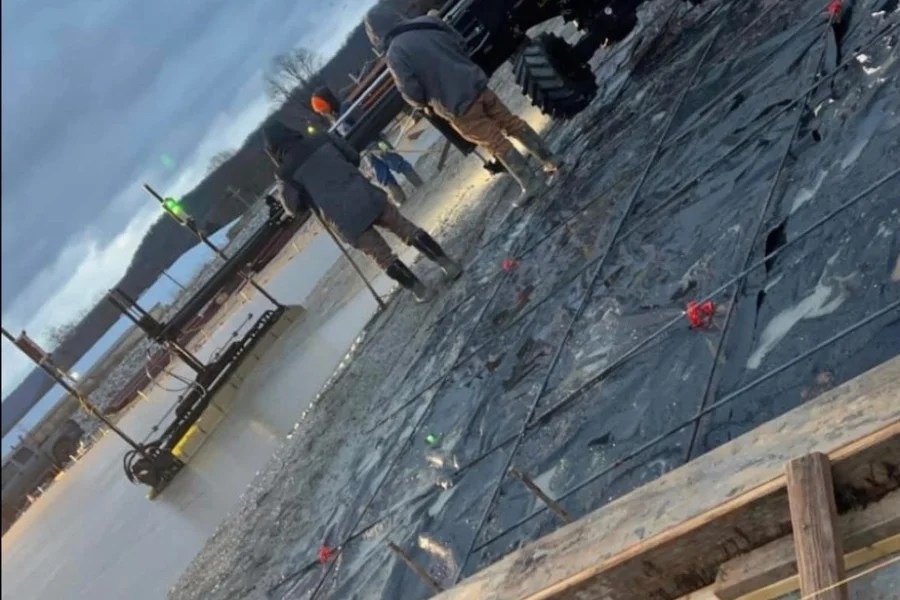
A tripod-mounted rotating laser establishes the finished floor elevation. Receivers on the screed head read the beam continuously and drive the auger and vibrating strike-off to that plane.
Laser screed is the standard for commercial and industrial slabs where flatness, levelness, and schedule matter. This guide covers how it works, the FF/FL numbers you can hit, when to use it instead of hand-finishing, and how to spec it for your project.
Laser-guided screeds hold tighter FF (flatness) and FL (levelness) numbers than hand-finishing — critical for racking, forklifts, and defined-traffic aisles.
A single crew can place and finish a full day's pour in a fraction of the time hand-screeding takes, reducing shift overtime and concrete waste.
Laser plane control removes the human variance that shows up in long straight-edge readings on hand-finished slabs.
Two-to-three-person laser screed crews replace six-to-eight-person hand-screed crews on large pours — with better results.
A tripod-mounted rotating laser establishes the finished floor elevation. Receivers on the screed head read the beam continuously and drive the auger and vibrating strike-off to that plane.
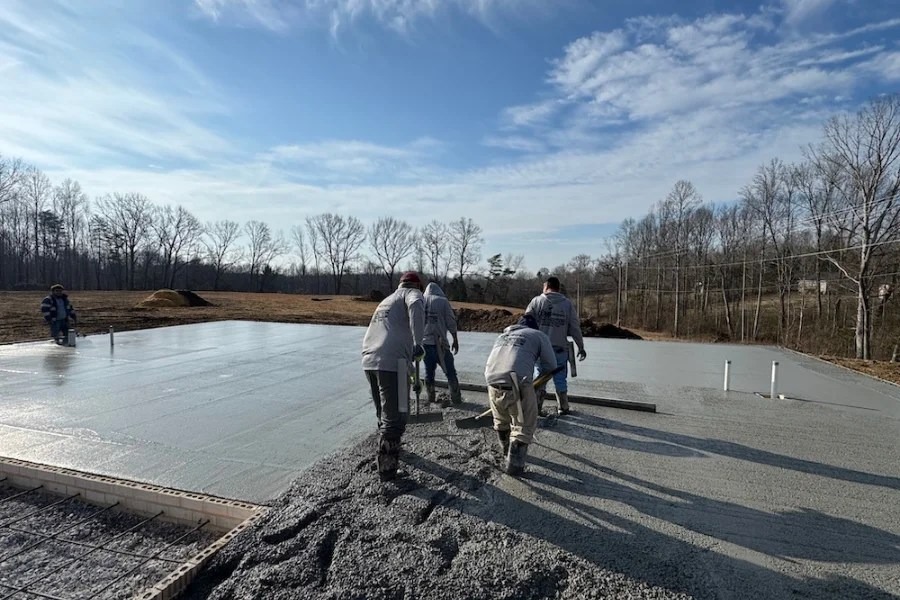
Ready-mix is placed ahead of the screed at a controlled slump (typically 5–6"). The screed head advances on its own hydraulics — no wet-screed rails, no chairs to trip over.
The auger meters the concrete to the correct head; the vibrating blade consolidates and strikes off to the laser plane in one pass. The result is a wet slab already at grade.
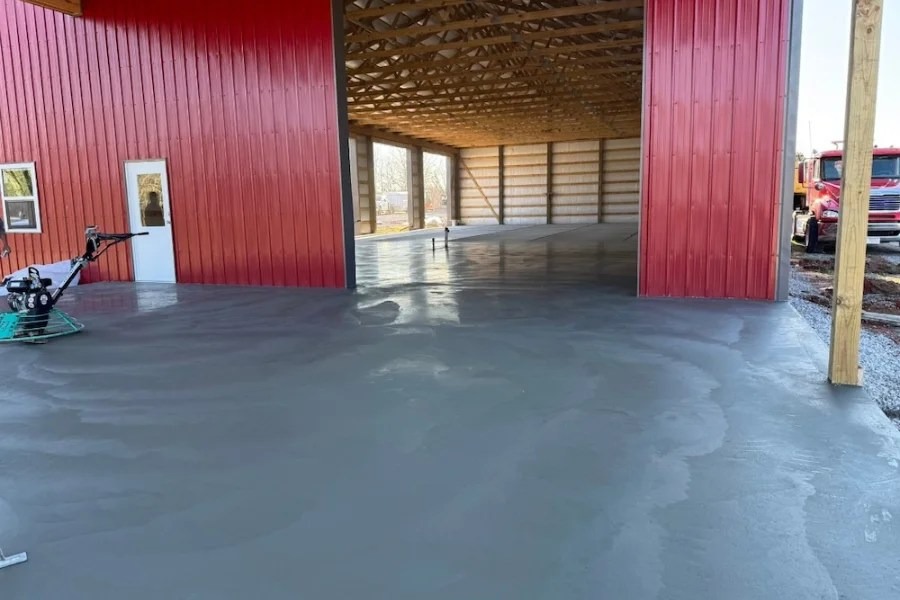
Bull-float, then ride-on pans as the slab firms, then hard-trowel passes for a burnished commercial finish. Saw-cut control joints follow the pour on the cure schedule.
| Metric | Hand-finish | Laser screed |
|---|---|---|
| Best pour size | Under ~3,000 SF | 3,000 SF and up |
| Tolerance | Roughly ±1/4" over 10' | Roughly ±1/8" over 10' |
| FF/FL numbers | Not typically specified | FF 25–50, FL 20–35 achievable |
| Crew size | 6–8 for large pours | 2–3 with the screed |
| Speed | Slower on big slabs | Fast — placement is the limit |
| Cost per SF | Lower on small pours | Lower on large pours |
If forklifts, racking, or defined-aisle traffic ever touch the slab, the finish flatness matters. These are the projects where laser screed pays for itself.
Standard commercial specs of FF 35 / FL 25 are routine. For defined-traffic and very-narrow-aisle warehouses we can target FF 45+ / FL 35+ with the right mix design and finish crew.
Usually not under about 3,000 square feet — mobilization and setup outweigh the productivity gain. For anything bigger, or where the spec calls for FF/FL numbers, laser screed is faster and flatter.
No. The screed places the slab flat to the laser plane; hand and ride-on finishing still bring the surface up to a burnished trowel finish. You get both — a flatter starting point and the same finish quality.
Typically 5–6" for laser screed work, sometimes with a mid-range water reducer. Too stiff and the auger drags; too wet and the finish suffers.
Serving Sparta and the Upper Cumberland within a 50-mile radius. Site walk, written scope, no surprises.